Short answer
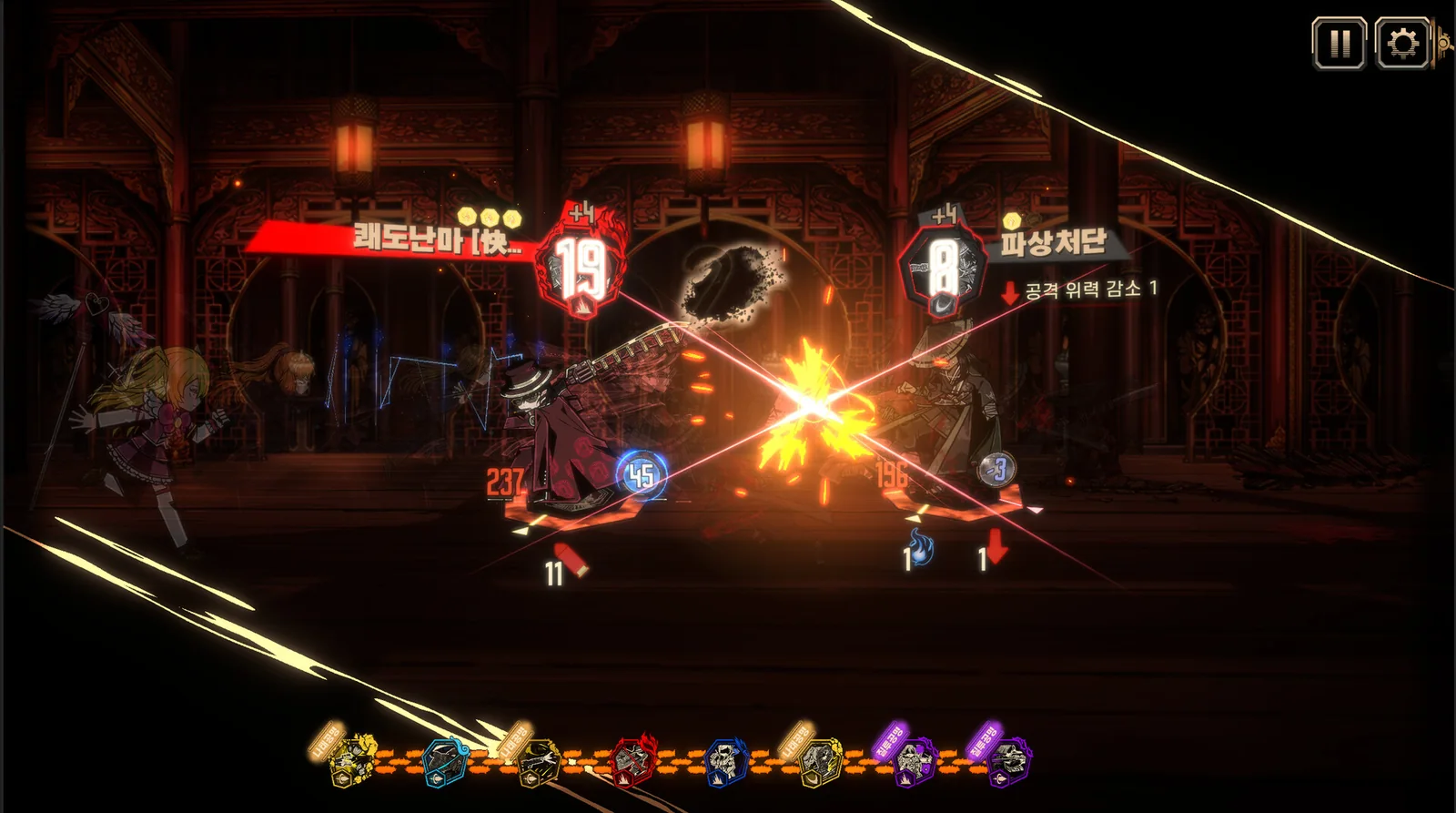
A Clash can happen when characters target one another. ProjectMoon’s Steam description says the result depends on the strength of the opposing skills plus an element of luck. The winner can shut down the loser’s skill.
That makes a Clash more than a damage comparison: it can prevent the losing action from completing.
Why targeting comes first
Both sides act in the same combat phase after commands are selected. You therefore need to inspect opposing targets before the animation starts. When an enemy action is answered by a Sinner who targets that enemy, the planned interaction may become a Clash.
The interface can contain additional information, but the durable beginner question is simple: which actions are meeting, and which enemy actions remain unopposed?
Strength and uncertainty
Steam explicitly mentions opposing skill strength and luck. This page does not publish a complete numerical formula because current coin, sanity, offense-level and modifier interactions require a patch-specific source and testing set.
When comparing two actions, avoid reading one visible number as an unconditional guarantee. Treat the screen as a forecast of an interaction with defined variables, not as a static damage label.
What winning changes
The official description says a winner can shut down the loser’s skill. In practical reading terms, a favorable Clash may both preserve your intended action and remove an incoming action from that exchange.
This is also why maximizing immediate damage is not always the only question. Stopping a dangerous action can be the more important outcome.
A safe beginner checklist
- Read every enemy target before confirming the chain.
- Identify which actions will oppose one another.
- Check whether any dangerous action is left without an answer.
- Do not assume an old guide’s numerical thresholds still match the current patch.
- Separate the official definition from community optimization advice.